
AI workflows with human control.
Agents need more than a prompt to do useful work. Ascape brings tools, workflow steps, approvals and run history into one workspace.
- Project
- Ascape
- Contribution
- Product engineering in partnership with Accelerare.
- Current stage
- Live product
A shared goal. A saved, checked result.
Archived views of a completed Ascape demo run using fictional meeting notes. See the connected workflow, recorded actions and saved pipeline outputs.
Source: Ascape demo captures from 9 October 2026. The meeting notes are demonstration data; account and private workspace details are outside these views.
Ascape walkthrough steps
- 0–6 seconds: a shared goal connects a timer, two specialist agents and a checked-report pipeline.
- 6–12 seconds: the saved run separates accepted actions from suggestions and unresolved decisions.
- 12–18 seconds: the pipeline records draft, review and delivery outputs with their supporting evidence.
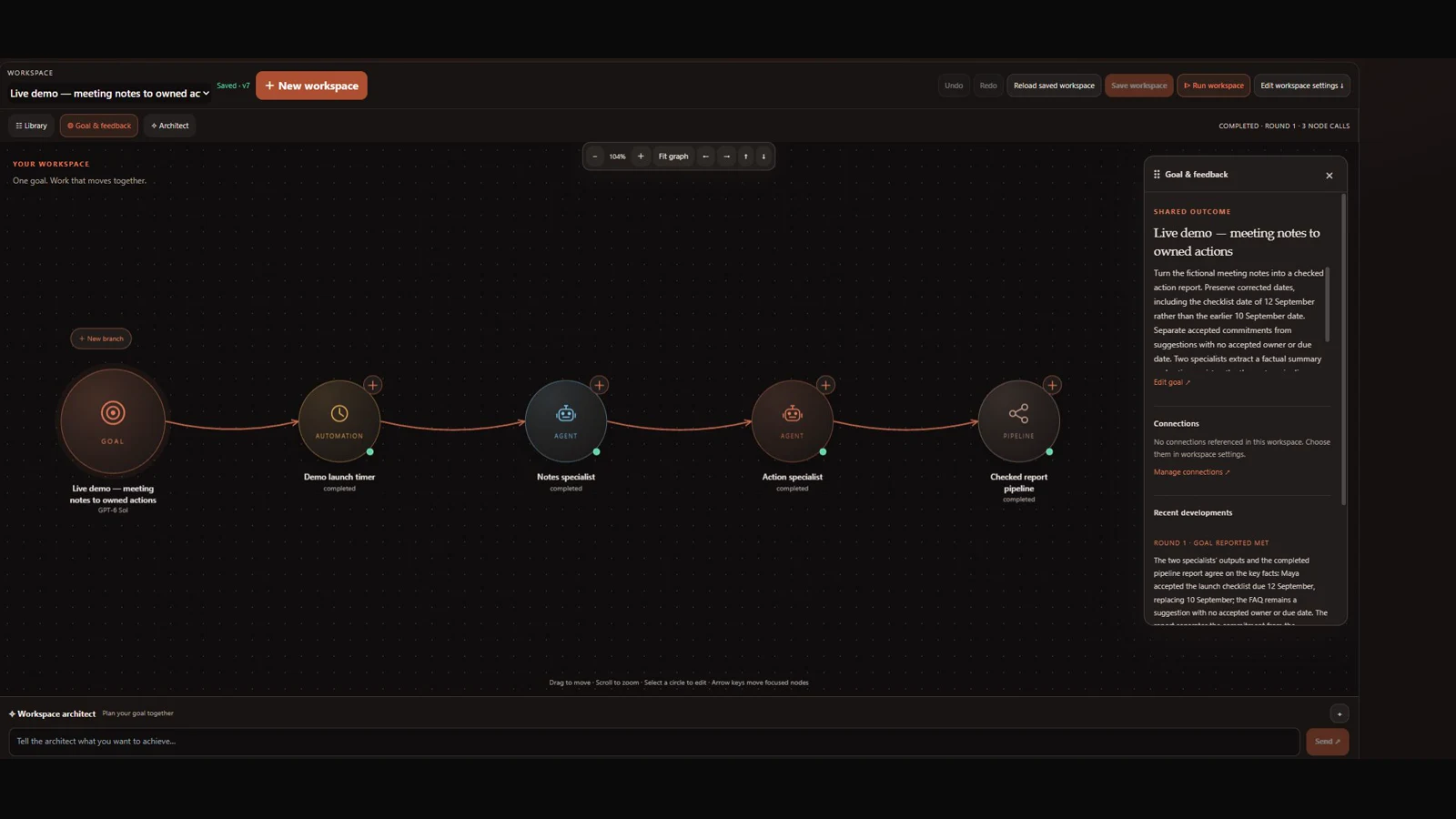
The connected workflow
The captured canvas shows the goal and its connected work, with the timer, specialist agents and pipeline marked completed.
Open larger workflow screenshot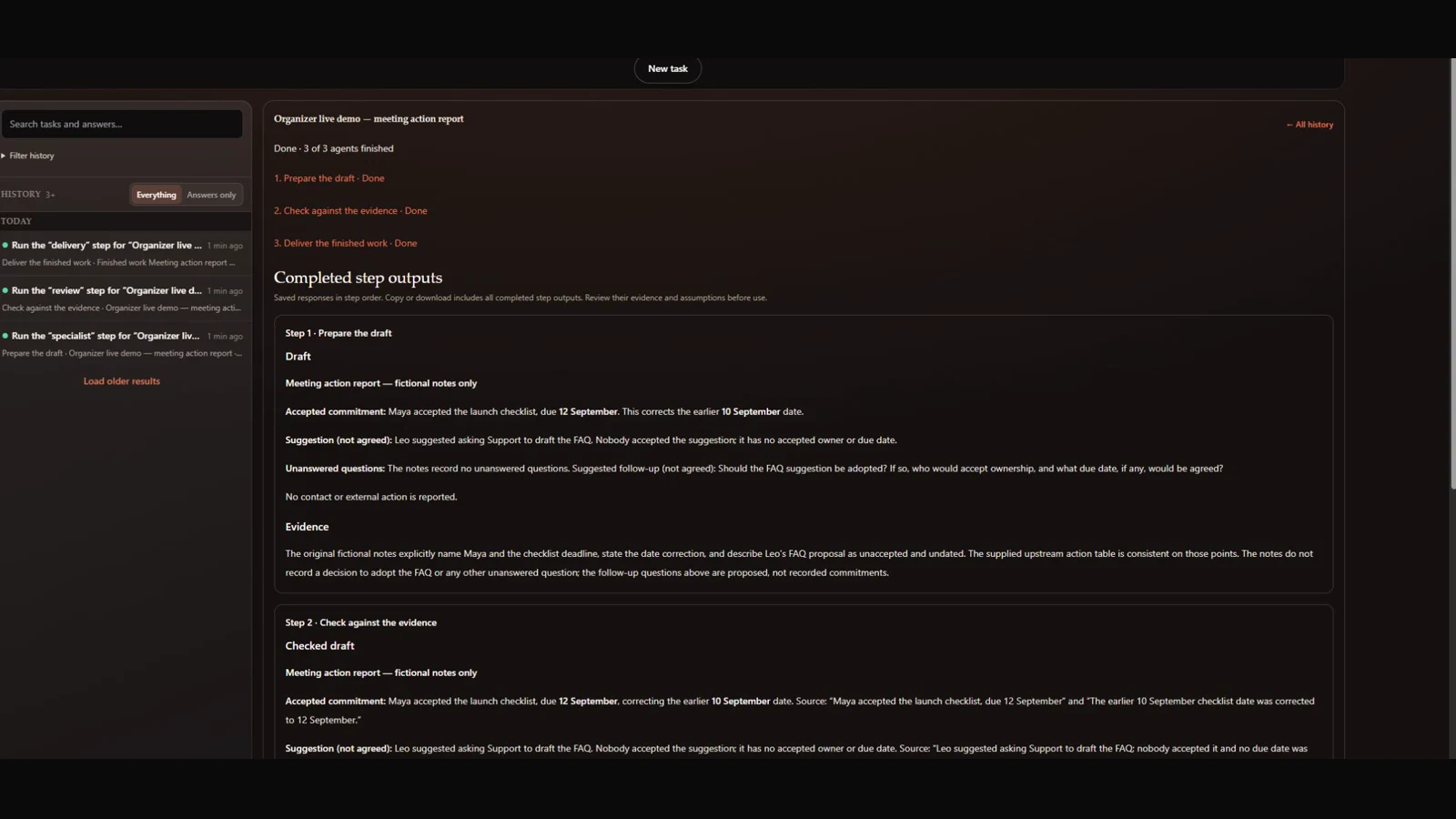
The recorded output
The pipeline retains completed step outputs and the evidence used to distinguish accepted commitments from unassigned suggestions.
Open larger output screenshotThe problem and the work.
An AI workflow can cross several tools and take actions with real consequences. The engineering problem is to make that work usable while keeping access, budgets and decisions under human control.
Ascape is built in partnership with Accelerare. The shared product work covers the workspace where teams define agents, connect capabilities, run workflows and govern the actions those workflows take.
- Agent and workflow creationTurn a described outcome into an agent or a coordinated workflow with defined tools and outputs.
- Connections and executionConnect models and services, then run work through conditions, parallel steps, waits and reviews.
- Governance and run historyApply permissions, budgets and approval gates, with a record of the actions taken.
Inside the system.
Define work before running it
The workspace turns a requested outcome into agent behavior or a workflow. Explicit tools, steps and outputs give the work a structure that can be reviewed and changed.
Scope the tools available to each job
Each job receives the models, services, browser sessions and local tools it needs. Connections make those capabilities available without handing raw credentials to a model.
Keep workflows durable
Execution supports conditions, parallel steps, waits, reviews and scheduled runs. Work can pause, recover and keep its place instead of depending on a single uninterrupted model response.
Put control around consequential actions
Approvals, budgets and permissions govern execution. An immutable run history records actions, while MCP, A2A, AGNTCY, REST and GraphQL support connections across systems.
Ascape technical notes
Jobs are scoped to the capabilities they need. The platform supports MCP, A2A and AGNTCY, alongside REST and GraphQL connections. Its public directory compares agents by capability, publisher, protocol and recorded trust evidence.
Where the work stands.
Live product
The product is live. The scope described here includes agent creation, connected workflows and governance. This is collaborative product work with Accelerare.
Open AscapeProject notes updated .
From request to governed work.
The workflow separates defining the job, connecting its tools, executing it and recording the actions. Approval gates sit within execution.
- DefineAn outcome, an agent or a coordinated workflow.
- ConnectScoped models, tools and services for the job.
- Run & reviewExecution with waits, recovery and human approvals.
- RecordA history of actions, permissions and run activity.
Bring us your version of the problem.
We can scope a project around your tools, data and the outcome you need.